A practical guide for cottages, country homes, farms, and properties without natural gas
If you live in a city or a subdivision with natural gas service, choosing fuel for a home standby generator is usually simple. The generator connects to the existing natural gas line, and as long as the gas meter and piping are properly sized, the system has a steady fuel supply during an outage.
But rural Ontario is different.
Many homes outside major towns do not have natural gas at the road. Some properties rely on propane for heating, cooking, hot water, pool heaters, or fireplaces. Others use oil, wood, electric heat, or a mix of systems. Cottages, farms, acreages, waterfront homes, and rural properties often have longer driveways, private wells, sump pumps, septic systems, detached garages, barns, workshops, or extra outbuildings.
That changes how backup power should be planned.
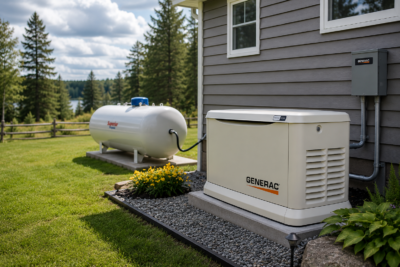
For many rural homeowners, a propane standby generator is one of the most practical ways to get automatic backup power. It can protect the home when the grid goes down, especially during storms, ice, wind, freezing rain, or long rural outages where repair crews may take longer to reach the area.
But propane generator installation has to be planned properly. The tank size matters. The regulator matters. The distance between the tank and generator matters. The electrical loads matter. The way the generator is placed on the property matters. And most importantly, the homeowner needs to understand how long the generator can realistically run based on the amount of propane available.
This article explains propane standby generators from a technician’s point of view, with a focus on Ontario homes where natural gas is not available or not practical.
Why propane is common for rural standby generators
Natural gas is convenient, but it is not available everywhere. Once you get outside dense residential areas, many Ontario homes simply do not have access to a natural gas line. In those cases, homeowners usually look at propane or diesel for standby power.
For residential standby generators, propane is often the more common and practical choice. It is widely available, it can be stored on the property, and many home standby generators are designed to operate on propane vapour.
That matters because a standby generator is supposed to be automatic. When the power goes out, you do not want to be outside in a storm pouring gasoline into a portable generator. You do not want extension cords running through windows. You do not want to be trying to start equipment in freezing rain. You want the system to detect the outage, start by itself, transfer power safely through the automatic transfer switch, and keep the home running.
Propane makes that possible for rural properties.
A properly installed propane standby generator can support important home systems such as:
Furnace or boiler controls
Fridge and freezer
Sump pump
Well pump
Septic system controls
Internet and modem
Security system
Lights and outlets
Garage door opener
Kitchen circuits
Medical devices
Home office equipment
Selected appliances
Air conditioning, depending on generator size and load management
The exact list depends on the generator size and how the system is designed. Some homeowners want essential circuits only. Others want whole-home backup with load management. The right answer depends on the home and budget.
Propane is stored fuel, and that changes the planning
The biggest difference between natural gas and propane is simple: propane is stored on your property.
That is both an advantage and a responsibility.
With natural gas, the supply comes from the utility. As long as the gas network is operating and your service is active, the generator has fuel. With propane, you have a tank. The generator can only run as long as there is enough propane in that tank.
This is why tank sizing is one of the most important parts of a propane standby generator installation.
A small propane tank may be fine for a fireplace or cooking appliance, but it may not be enough for a standby generator during a long outage. A generator under load can use a meaningful amount of fuel, especially in cold weather when the home’s heating system is also running and the generator is supporting multiple circuits.
The more load you put on the generator, the more fuel it uses.
A rural homeowner should not think about propane only in terms of “Do I have a tank?” The better question is:
Do I have enough propane storage for the type of outages I want to be protected against?
A homeowner who only wants protection for short outages may be comfortable with a smaller setup. A homeowner in a rural area that has experienced two-day, three-day, or week-long outages should plan more carefully.
The most important question: how long do you want the generator to run?
Before choosing tank size or generator size, you should think about the kind of outage protection you actually want.
Some people want the generator mainly for short interruptions. They want the sump pump, furnace, fridge, freezer, and basic lights protected until the utility comes back. In that case, the system may only run a few hours at a time.
Other homeowners want serious rural resilience. They may live on a private road, in a heavily treed area, or in a township where storms can knock power out for a long time. They may have livestock, a home business, a well pump, a medical need, or a property that cannot easily be left unattended. In that case, they may want enough fuel storage to ride through a multi-day outage.
That decision affects the whole system.
A larger tank gives you more runtime. A larger generator gives you more power capacity, but it can also burn more fuel depending on load. A well-designed system balances comfort, cost, and runtime.
This is where a good consultation helps. A technician should not simply sell the biggest generator and walk away. They should ask how the home is used, what must stay on, what can be turned off, and how long the homeowner wants to be protected.
Propane tank size is not just about the generator
One mistake homeowners sometimes make is thinking the generator is the only thing using propane.
In many rural homes, propane may also feed:
A furnace
A boiler
A water heater
A range
A fireplace
A clothes dryer
A pool heater
A garage heater
A shop heater
Outdoor appliances
During a winter outage, the generator may be running at the same time the furnace is calling for heat. If the same tank is feeding both systems, the propane supply needs to support both.
This is not just about the amount of fuel in the tank. It is also about delivery capacity, regulator setup, pressure, and pipe sizing. The generator needs enough fuel flow to start and carry the load. If the fuel system is undersized, the generator may struggle, fault, run poorly, or fail to support the home properly.
From a technician’s point of view, propane generator problems are not always generator problems. Sometimes the generator is doing exactly what it should, but the fuel supply is not sized or set up correctly.
That is why propane coordination matters.
The generator installer and propane supplier may both be involved. The propane supplier typically handles tank sizing, tank placement, regulators, and refills. The generator installer handles the generator system, electrical work, transfer switch, and the fuel connection within the installation scope, depending on licensing and arrangement.
The homeowner should make sure both sides understand the full load.
Generator size and propane use go together
A 14 kW generator and a 26 kW generator do not use the same amount of propane under the same conditions. Bigger generators can support more load, but fuel consumption depends on how hard the unit is working.
This is why proper sizing is important.
If the generator is too small, the homeowner may not get the comfort or protection they expect. If it is too large for the need, the upfront cost may be higher and fuel usage may be greater than necessary during operation.
For some rural homes, a mid-sized generator with smart load management is a better choice than oversizing the system. Load management allows the generator to prioritize important loads and temporarily prevent high-demand appliances from running all at once.
For example, a home may have central air conditioning, an electric dryer, a well pump, a sump pump, and kitchen appliances. If everything starts at the same time, the generator may be overloaded. A proper transfer switch and load management setup can help prevent that.
The goal is not just to install a generator. The goal is to install a system that behaves properly when the homeowner actually needs it.
What should a propane standby generator power in a rural home?
Every home is different, but rural properties often have a few systems that deserve special attention.
The first is the well pump. If your home is on a private well, no power usually means no running water. That affects drinking water, toilets, showers, laundry, and sometimes livestock or outdoor needs. A well pump can also have a heavy starting load, so it must be considered during generator sizing.
The second is the sump pump. Many Ontario homes rely on sump pumps during heavy rain, thawing snow, or high groundwater conditions. Unfortunately, storms that cause outages can also bring the water conditions that make sump pumps necessary. Backup power for the sump pump can prevent serious basement damage.
The third is heating. In winter, a rural outage is not just inconvenient. It can become a safety issue. Even if the home uses propane, oil, or gas heat, the furnace or boiler usually still needs electricity for controls, fans, pumps, ignition, or circulation. Without backup power, the heating equipment may not operate.
The fourth is refrigeration. A fridge and freezer are not huge loads compared with heating or air conditioning, but they matter during long outages. Food loss can become expensive quickly, especially for rural homeowners who keep stocked freezers.
The fifth is communication. Internet, Wi-Fi, cell boosters, security systems, and home office equipment are becoming more important. During a storm, homeowners often want to check outage updates, contact family, monitor weather, or keep working.
The sixth is septic and water treatment equipment. Some rural homes have septic pumps, treatment systems, UV water systems, softeners, pressure systems, or other equipment that depends on electricity.
When designing backup power for a rural home, these systems should be discussed clearly.
Whole-home backup vs essential-load backup
A propane standby generator can be installed in different ways. The two most common homeowner expectations are whole-home backup and essential-load backup.
Whole-home backup means the generator is connected in a way that supports the main home electrical system, usually with an automatic transfer switch and proper load management where needed. This gives the homeowner the most convenience. During an outage, much of the home can continue operating normally, depending on generator capacity.
Essential-load backup means only selected circuits are backed up. This may include the furnace, fridge, freezer, sump pump, well pump, lights, internet, and a few outlets. This approach can reduce cost and fuel use, but it requires the homeowner to accept that not everything in the house will operate during an outage.
Neither option is wrong.
The right choice depends on the property, the homeowner’s expectations, and budget. Some cottage owners only need essential backup. Some full-time rural homeowners want whole-home comfort because they cannot easily leave the property during an outage.
A good installer should explain the trade-offs in plain language. If a homeowner thinks they are buying whole-home backup but the quote only covers selected circuits, that can lead to disappointment. The scope should be clear before installation begins.
Placement matters on rural properties
Generator placement is important everywhere, but rural properties can add extra challenges.
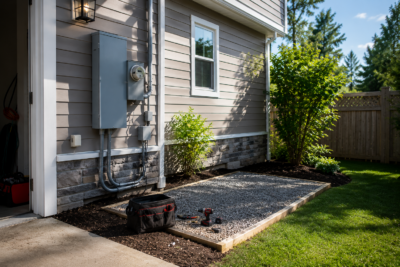
A generator needs proper clearance from the home, windows, doors, vents, and other openings. It also needs room for airflow, exhaust, and service access. The installer has to follow manufacturer requirements and applicable codes.
But beyond the basic clearance rules, rural homes often have site conditions that need practical judgment.
For example, snow drifting can be a major concern. A location that looks clean in July may be buried in snow in February. If a generator is placed where snow slides off a roof, drifts against a wall, or piles up from plowing, it may be harder to service and could have airflow issues.
Drainage is another issue. The generator should not sit in a low spot where water collects. Freeze-thaw cycles can shift poorly prepared ground. Soft soil can settle. Gravel, pad preparation, elevation, and base choice all matter.
Distance is also important. If the generator is placed very far from the propane tank, transfer switch, or electrical panel, the installation becomes more complex. Long gas and electrical runs can add cost and require more planning.
Security and accessibility should also be considered. On some rural or seasonal properties, equipment visibility, access during winter, and service access are all part of the decision.
The best generator location is not always the most hidden location. It is the location that is safe, serviceable, code-compliant, and practical year-round.
Propane generators and Ontario winter conditions
Ontario winter is one of the main reasons rural homeowners consider standby power in the first place.
Freezing rain, wet snow, high winds, and fallen branches can cause outages. In some areas, outages are short. In other areas, especially rural roads and heavily treed regions, restoration can take longer.
A propane standby generator is designed to sit outdoors, but it still needs to be kept clear and maintained. Snow should not block the air intake, exhaust area, or service panels. The area around the generator should be accessible for inspection and maintenance. If the generator is buried after a storm, it may not operate properly.
This is one reason elevated generator stands or thoughtful pad placement may be useful in certain locations. Not every home needs elevation, but homes in heavy snow areas, low drainage areas, or uneven ground may benefit from a more carefully planned base.
Winter also affects the homeowner’s fuel planning. If the generator runs during a long winter outage, the propane tank may be feeding both the generator and the heating system. That can reduce runtime faster than expected. Rural homeowners should keep their propane tank filled before storm season and understand their refill arrangement.
A standby generator is only as ready as the system around it.
How automatic operation works during an outage
One of the biggest benefits of a standby generator is that it operates automatically.
When utility power fails, the system senses the outage. After a short delay, the generator starts. Once the generator is producing stable power, the automatic transfer switch transfers the backed-up loads to generator power. When utility power returns, the transfer switch moves the home back to utility power and the generator shuts down after a cool-down period.
For rural homeowners, this automatic operation can be very valuable.
If you are away from a cottage, the generator can protect the property without someone being there to start it. If the power goes out overnight, the system can start while you are sleeping. If you are at work or travelling, the generator can help protect the freezer, sump pump, heating system, and other important loads.
This is a major difference between a standby generator and a portable generator. A portable generator requires manual setup, fuel handling, and safe connection. A standby generator is permanently installed and ready.
That convenience is one of the main reasons homeowners invest in it.
Maintenance is not optional
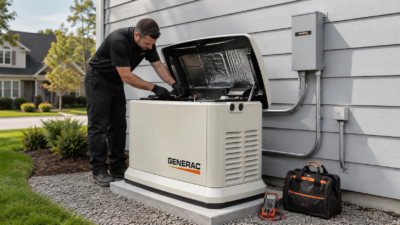
A propane standby generator may sit quietly most of the year, but it still needs regular maintenance.
The generator has an engine. It has oil, filters, spark plugs, a battery, a charger, wiring, sensors, and moving parts. It operates outdoors through heat, cold, snow, rain, insects, rodents, leaves, dust, and humidity. Even if it only runs for weekly exercise and occasional outages, it still needs attention.
Regular maintenance may include:
Oil and filter changes
Air filter inspection or replacement
Spark plug inspection or replacement
Battery testing
Checking charger operation
Inspecting wiring and connections
Checking fuel connections
Cleaning debris from the unit
Testing operation
Reviewing controller status and fault history
Confirming the exercise schedule
For rural homes, maintenance is even more important because the generator may be protecting systems that cannot easily fail. A weak battery, blocked air intake, low oil condition, rodent damage, or neglected service issue can prevent the generator from doing its job during an outage.
A homeowner should not wait until the first storm to find out whether the generator is ready.
Propane refill planning
A standby generator does not refill itself.
If you rely on propane, you should have a plan with your propane supplier. Many homeowners use automatic delivery based on tank monitoring or scheduled refill estimates. Others check the tank manually. During storm season, the safer approach is to avoid letting the tank get too low.
The refill plan matters more for homes that are seasonal, remote, or hard to access in winter. If the driveway is not plowed, the tank is not accessible, or the supplier is overloaded during a regional outage, getting propane quickly may be harder.
A good propane plan includes:
Proper tank size
Reliable supplier
Clear delivery access
Monitoring or regular checks
Keeping the tank at a healthy level before winter
Understanding generator fuel demand
Planning for long outages
A standby generator gives peace of mind, but only when the fuel supply is managed.
Is propane better than natural gas?
The honest answer is: it depends on the property.
Natural gas is usually the most convenient option when it is available and the gas service can support the generator. It does not require a storage tank on the property, and the homeowner does not need to schedule fuel deliveries for the generator.
Propane is often the best option when natural gas is not available. It is also useful for cottages, rural homes, farms, and properties that already use propane. The homeowner controls the fuel supply because it is stored on-site.
The trade-off is that propane requires more planning. Tank size, refill schedule, regulator setup, fuel line sizing, and winter access all matter.
For many rural Ontario homes, the question is not really “natural gas or propane?” The question is “How do we design the propane system properly so the generator can do its job?”
That is the better conversation.
Is propane better than diesel for a home standby generator?
Diesel can be a strong option for larger commercial and industrial backup power systems, and it can make sense in certain applications. But for many residential properties, propane is often easier to integrate into a home standby generator setup.
Propane is already used in many rural homes. It can be stored for long periods. It is common for residential standby generator models. It does not have the same handling experience as gasoline, and it is usually simpler for homeowners than managing diesel storage for a residential backup system.
That said, every property is different. Large estates, farms, commercial buildings, and high-demand properties may require a more detailed comparison.
For a typical rural home, cottage, or acreage, propane is often the fuel that makes automatic standby power practical.
What a proper propane generator quote should include
When comparing quotes for a propane standby generator, make sure you are comparing the full installation, not just the generator model.
A complete quote should clearly explain:
Generator size and model
Transfer switch type
What loads will be backed up
Whether the system is whole-home or essential-load
Electrical installation scope
Included gas or propane connection scope
Pad or base details
Battery inclusion
Permit and inspection coordination
Startup and testing
Warranty registration
Homeowner walkthrough
Maintenance options
Any extra costs for long runs, trenching, upgrades, or special site conditions
If the home needs a propane tank upgrade or new tank, clarify whether that is included or handled separately through the propane supplier. Many generator contractors do not supply propane tanks directly, but they may be able to recommend suppliers depending on the location.
A clear quote protects both the homeowner and the installer. It prevents misunderstanding and helps the homeowner make a confident decision.
Common mistakes to avoid
The first mistake is choosing the generator before understanding the home. Generator size should be based on actual loads, not guesswork.
The second mistake is ignoring propane tank size. A generator with a small or poorly planned tank may not provide the runtime the homeowner expects.
The third mistake is forgetting about the well pump. For rural homes, water access during an outage is often just as important as lights and outlets.
The fourth mistake is placing the generator where it will be blocked by snow, water, landscaping, or poor service access.
The fifth mistake is assuming all quotes include the same scope. Some quotes are turnkey. Others leave out important items.
The sixth mistake is skipping maintenance. A standby generator is emergency equipment. It should be treated like something you are depending on, because during an outage, you are.
Who should consider a propane standby generator?
A propane standby generator may be a strong fit if:
Your home does not have natural gas service
You already use propane for heating or appliances
You live in a rural area with frequent outages
You have a private well
You have a sump pump
You have a finished basement
You work from home
You have medical equipment or special power needs
You own a cottage or seasonal property
You want automatic backup power when you are away
You want to protect food, heat, water, and essential systems
You want a safer, cleaner alternative to portable generator setup
It is especially useful for homeowners who want the generator to start automatically without manual setup.
Final thoughts: propane backup power is all about planning
A propane standby generator can be an excellent solution for rural Ontario homes, cottages, farms, and properties without natural gas. It gives homeowners automatic backup power, protects essential systems, and reduces the stress of long outages.
But the installation has to be designed properly.
The generator size, transfer switch, propane tank, regulator, fuel line, electrical loads, site placement, and maintenance plan all work together. If one part is overlooked, the system may not perform the way the homeowner expects.
That is why a proper consultation matters.
At Generator Experts, we help Ontario homeowners choose and install standby generator systems that match the property, the fuel source, and the real-life needs of the home. Whether you are protecting a rural house, cottage, acreage, or family property without natural gas, our team can review your setup and explain your options clearly.
If you are considering a propane standby generator in Ontario, book a free in-home or virtual consultation with Generator Experts. We will look at your home, discuss your backup power needs, and help you choose a system that is safe, practical, and ready for the next outage.