
All About Home Generators
What Happens to Your Pets During a Power Outage?
Why Ontario homeowners with dogs, cats, aquariums, or small animals should think about automatic backup power Most people think about power outages in terms of
The #1 Authorized Generac Home Standby Generator Dealer in Ontario
When homeowners start shopping for a standby generator, they usually ask one of two questions first.
“How many kilowatts do I need?”
Or:
“Can this generator power my whole house?”
Those are important questions, but they are not the whole story. In many homes, the generator size is only one part of the backup power system. The automatic transfer switch, the home’s electrical service size, the panel setup, and the way the loads are managed all matter just as much.
This is where many homeowners get confused.
They may hear terms like 100 amp service, 200 amp service, 100 amp transfer switch, 200 amp transfer switch, service-rated switch, whole-home backup, selected circuits, load management, subpanel, and automatic transfer. It can start to feel more complicated than it should.
The good news is that you do not need to become an electrician to understand the basics. But if you are planning to install a home standby generator in Ontario, you should understand enough to ask the right questions and compare quotes properly.
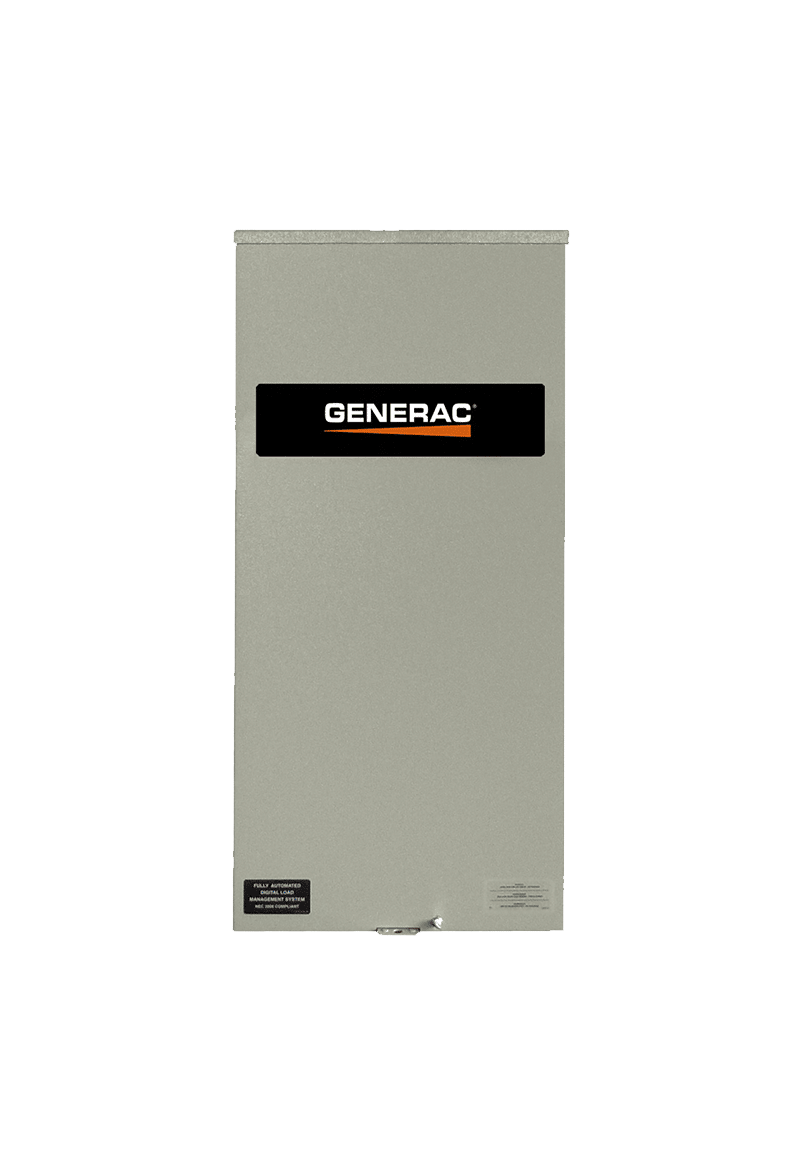
A generator is not just a box that sits outside the house. It becomes part of your electrical system. The transfer switch is the part that safely connects the generator to the home and disconnects the home from the utility grid during an outage. If the generator is the engine of the backup power system, the transfer switch is the traffic controller.
This article explains the difference between 100 amp and 200 amp transfer switches, how they relate to your home’s electrical service, and why the right setup depends on the house, not just the generator model.
An automatic transfer switch is one of the most important parts of a standby generator system.
When the power goes out, your generator does not simply push electricity into the house on its own. The system has to safely disconnect the home from utility power before generator power is supplied. This prevents dangerous backfeeding into the grid and protects the home’s electrical equipment.
Here is the basic process.
Utility power fails. The generator controller senses the outage. After a short delay, the generator starts. Once the generator is producing stable power, the automatic transfer switch moves the home’s selected loads from utility power to generator power. When utility power returns, the switch transfers the home back to utility power and the generator shuts down after its cool-down period.
That whole process happens automatically when the system is installed properly.
The transfer switch is not optional for a permanent standby generator installation. It is what makes the system safe, automatic, and practical.
Without the right transfer switch, a standby generator cannot properly serve the home. That is why choosing the transfer switch is not just a small detail in the quote. It is a major part of the system design.
When people say a home has 100 amp service or 200 amp service, they are usually talking about the size of the main electrical service feeding the home.
A 100 amp service is common in many older or smaller homes. A 200 amp service is common in newer homes, larger homes, or homes with more electrical demand. Some homes have larger services, but 100 amp and 200 amp are the common ones homeowners hear about.
The amp rating represents the maximum current capacity of the service equipment. It does not mean the home is always using that much electricity. It means the system is designed around that capacity.
A transfer switch also has an amp rating. A 100 amp transfer switch is designed for a 100 amp setup. A 200 amp transfer switch is designed for a 200 amp setup. The switch must be chosen based on the home’s electrical system and the backup design.
This is where homeowners sometimes misunderstand the relationship between generator size and switch size.
A 22 kW generator does not automatically mean you need a 200 amp transfer switch. A 26 kW generator does not automatically mean every home can run everything without load management. A 100 amp home may need a different approach than a 200 amp home, even if both homeowners choose the same generator model.
The transfer switch should match the installation design.
Your home’s electrical service size affects how a standby generator can be connected.
If your home has 100 amp service, the system may be designed differently than a home with 200 amp service. If your home has a 200 amp service, a 200 amp transfer switch may be used for whole-home backup, depending on the layout and the generator size. If your home has multiple panels or a more complex setup, the installation may require a different design.
The service size also affects homeowner expectations.
For example, a homeowner with a 200 amp service may assume that a 200 amp transfer switch means the generator can power everything in the house at once. That is not always true. The transfer switch may be rated for 200 amps, but the generator still has a limited power output. If the house has large loads like central air conditioning, electric range, electric dryer, hot tub, EV charger, pool equipment, or electric heating, the generator may need load management.
The transfer switch rating tells you what the switch can handle. It does not magically increase the generator’s output.
This distinction is important. A properly designed system considers both the switch rating and the generator capacity.
The phrase “whole-home generator” can be misleading if it is not explained properly.
Whole-home backup usually means the generator is connected to the home’s main electrical system through an automatic transfer switch. During an outage, the home is supplied through that backup system. That does not always mean every appliance can run at the same time without limits.
In many homes, whole-home backup works very well because not all loads operate at the same time. The fridge cycles on and off. The furnace fan runs when needed. Lights and outlets use a modest amount of power. The sump pump only runs when water level requires it. The well pump starts and stops. The air conditioner cycles.
But some appliances have heavy loads, especially when starting. Air conditioners, well pumps, electric dryers, electric ranges, hot tubs, pool heaters, and EV chargers can draw a lot of power.
If several large loads try to run at the same time, the generator can be overloaded unless the system is designed with load management.
That is why a technician should ask about the home’s major appliances before recommending a generator and transfer switch. The goal is not just to say “yes, it is whole home.” The goal is to make sure the system behaves properly during a real outage.
Load management is a way of controlling certain high-demand electrical loads so the generator does not become overloaded.
For example, a home may have central air conditioning, an electric dryer, a hot tub, and a well pump. The generator may be able to support many normal household loads, but it may not be smart to let every major load start at once.
With load management, some loads can be prioritized, delayed, or temporarily locked out when the generator is operating. This allows the generator to protect the most important parts of the home while preventing overload.
In practical terms, load management helps homeowners enjoy a more comfortable backup power system without oversizing the generator beyond what is reasonable.
This is especially useful in 200 amp homes where the homeowner wants whole-home convenience but still has large appliances that need to be controlled.
A good installer will explain which loads are backed up, which loads are managed, and what the homeowner should expect during an outage.
A 100 amp transfer switch may make sense in several situations.
The most obvious is a home with 100 amp electrical service. If the home’s main service is 100 amps, the backup system may be designed around that rating.
A 100 amp switch may also be used for selected-load or subpanel-style installations, depending on the home. In some cases, homeowners do not need or want the entire electrical system backed up. They may only want important circuits such as the furnace, fridge, freezer, sump pump, well pump, lights, internet, and a few outlets.
A 100 amp setup can be a practical option when the homeowner’s needs are focused on essentials rather than full comfort.
It may also make sense for smaller homes, cottages, rural properties, or installations where the electrical demand is moderate.
But a 100 amp transfer switch is not automatically “worse” than a 200 amp switch. It depends on the home and the goal. If the home’s electrical service and backup needs fit the setup, a 100 amp switch can be perfectly appropriate.
The problem is not using a 100 amp switch. The problem is using the wrong switch for the home or failing to explain what the system will and will not power.
A 200 amp transfer switch is commonly used for homes with 200 amp service, especially when the homeowner wants a whole-home backup setup.
Many modern Ontario homes have 200 amp service. These homes may have central air conditioning, finished basements, larger kitchens, home offices, pool equipment, larger garages, or future plans for higher electrical demand.
A 200 amp transfer switch can allow the generator system to be integrated with the main service in a clean and convenient way. When properly designed, it can give the homeowner a strong whole-home backup experience.
But again, the 200 amp rating does not mean the generator can run 200 amps of load continuously. The generator has its own output limit. The transfer switch is rated for the service equipment, while the generator is rated in kilowatts.
This is why a 200 amp switch often works together with load management.
For example, a homeowner may install a 22 kW or 26 kW standby generator with a 200 amp transfer switch. The system may back up the home, but certain large loads may be managed so the generator is not overloaded.
That is a normal and professional way to design a residential backup power system.
This is one of the biggest misunderstandings homeowners have.
A 200 amp transfer switch does not turn a generator into a 200 amp power source. It simply means the switch is rated for use in a 200 amp service setup.
The generator still has a kilowatt rating. The amount of power it can produce depends on the model and fuel type. Some generators produce slightly different power output on natural gas compared with propane. The exact specifications depend on the generator model.
If the home’s total electrical demand exceeds what the generator can supply, something has to be managed. That can be done through load management, selected circuits, homeowner behaviour, or choosing a larger generator where appropriate.
Think of it like a water pipe and a pump. A large pipe can handle a lot of flow, but if the pump only produces a certain amount, the pipe does not create more water. In the same way, the transfer switch can be rated for the service, but the generator still determines available backup power.
That is why system design matters more than one single number.
A professional standby generator quote should not only say which generator is included. It should also explain the transfer switch.
Homeowners should understand:
Is the transfer switch 100 amp or 200 amp?
Is it service-rated where applicable?
Is the system whole-home or selected-circuit?
Will the transfer switch be installed inside or outside?
Will any panels or circuits be moved?
Is load management included?
Which large loads will be managed?
Is the air conditioner included?
Will the well pump or sump pump be backed up?
Is the system designed for current loads only, or future loads too?
If two quotes include the same generator but different transfer switch setups, they are not the same quote.
One company may be quoting a whole-home setup with a 200 amp transfer switch and load management. Another may be quoting a smaller selected-circuit setup. One may include more electrical work, while another may leave certain upgrades or changes out. The final price can differ because the scope is different.
Homeowners should compare the full system, not just the generator model.
If your home has 100 amp service, a standby generator can still be a good option. The system just needs to be designed properly.
Many homes with 100 amp service can be backed up effectively, especially if they use natural gas or propane for heating, cooking, and hot water. The electrical load may be manageable if the biggest loads are not electric.
However, homes with 100 amp service can also have limitations. If the home has electric heat, a large electric water heater, an EV charger, hot tub, or other major loads, the installer needs to review the setup carefully.
In some cases, the generator installation can be designed around the existing service. In other cases, the homeowner may need or want a service upgrade, panel changes, or selected-load backup instead of trying to back up everything.
A good contractor should not automatically push every 100 amp home into the same solution. They should look at the actual electrical system and the homeowner’s priorities.
If your home has 200 amp service, you may have more options for a whole-home generator setup. A 200 amp automatic transfer switch is commonly used in these installations.
But the home still needs to be assessed.
A 200 amp home can have high electrical demand. Many newer homes have more equipment than older homes: larger air conditioners, finished basements, kitchen appliances, sump pumps, home offices, security systems, pool pumps, hot tubs, and sometimes EV chargers.
The installer needs to identify which loads are essential, which loads are optional, and which loads need management.
A 200 amp service is a good starting point for whole-home backup planning, but it does not remove the need for careful sizing.
The question is not only “Do you have 200 amps?” The better question is “What are we trying to run during an outage, and how should the system manage those loads?”
Some homes have more than one electrical panel. There may be a main panel, subpanel, garage panel, pool panel, workshop panel, basement panel, or addition panel.
This can affect the generator design.
If the homeowner wants whole-home backup, the installer needs to understand how the panels are connected. If only selected loads need backup, some circuits may need to be moved or reorganized. If a detached garage, shop, or pool equipment is involved, the system may need more planning.
Multiple panels do not automatically mean the installation is difficult, but they do mean the quote should be based on a proper assessment.
Homeowners should show the installer all panels during the consultation. Do not assume the main panel is the only one that matters. If there is electrical equipment in the garage, basement, mechanical room, pool shed, or outbuilding, mention it.
The installer cannot plan for equipment they do not know about.
Air conditioning is one of the most common questions during generator consultations.
Many homeowners want their central air conditioner to work during an outage, especially during summer storms. This may be possible depending on the generator size, air conditioner size, starting load, and load management setup.
Air conditioners can have a high starting load. Even if the running load is manageable, the startup demand can be significant. In some homes, a soft start device or load management may be considered as part of the design.
If air conditioning matters to you, say so during the consultation. Do not assume it is included. Ask whether the quoted system supports the air conditioner and whether any load management is required.
This is especially important when comparing generator quotes. One quote may include AC support and load management. Another may not. On paper, both may show a generator and transfer switch, but the experience during an outage could be very different.
Electric vehicle chargers are becoming more common in Ontario homes. They also create new questions for generator installations.
In many cases, an EV charger is not treated as an essential backup load. During an outage, most homeowners prioritize the furnace, fridge, freezer, sump pump, well pump, lights, internet, and basic comfort. Charging a vehicle from a residential standby generator may not be practical or may require special planning.
If your home has an EV charger, tell the installer. It affects the overall electrical load and may influence load management decisions.
If you are planning to add an EV charger in the future, mention that too. A generator installation should consider future changes where reasonable. It is better to plan around future loads before equipment is installed than to be surprised later.
A good installer can explain whether the EV charger will be excluded, managed, or handled another way during generator operation.
Hot tubs, pool heaters, pool pumps, saunas, electric garage heaters, and workshop equipment can all affect generator planning.
Some of these loads may not need to run during an outage. Others may be important depending on the homeowner’s situation. For example, a pool pump may not be essential during a short outage, but a sump pump is. A hot tub may be nice to have, but it may not be worth using generator capacity during an emergency.
The important thing is to identify these loads early.
If a homeowner says “whole home,” but the house includes a hot tub, EV charger, electric range, electric dryer, and pool equipment, the installer needs to explain how those loads will be handled.
A standby generator is meant to protect the home. It is not always meant to make every luxury load operate normally during an outage.
That does not mean comfort is not possible. It means the system should be designed honestly.
Selected-circuit backup means only certain circuits are connected to generator power. This can be done through a transfer panel or other approved design, depending on the home.
Whole-home backup means the generator system is connected in a way that can serve the home more broadly through the main service equipment, usually with a properly sized automatic transfer switch.
Selected-circuit systems can be more limited but may be cost-effective for homeowners who only care about essentials. Whole-home systems are more convenient but often require more planning, larger equipment, and load management.
Homeowners should decide based on how they want to live during an outage.
If you only need heat, water, sump pump, fridge, freezer, internet, and some lights, selected-circuit backup may be enough.
If you want the home to feel as normal as possible during outages, whole-home backup may be the better direction.
The key is clarity. A homeowner should know exactly what kind of system is being installed.
A transfer switch cannot be properly chosen without looking at the home.
The installer needs to see the electrical service, panel location, meter location, available wall space, grounding, cable routes, generator location, gas or propane access, and major electrical loads.
A phone quote can provide a rough idea, but the final design should be based on actual site conditions.
For example, a home may technically have 200 amp service, but the panel area may be crowded, finished, or difficult to access. Another home may have a simple panel but a long distance to the generator location. Another may have multiple subpanels or an unusual service layout.
The transfer switch location also matters. It must be installed where it is safe, accessible, and appropriate for the electrical design.
A proper site assessment prevents guesswork.
When discussing a standby generator installation, ask direct questions about the transfer switch and service setup.
Good questions include:
What size is my electrical service?
Are you quoting a 100 amp or 200 amp transfer switch?
Is this a whole-home backup system or selected circuits only?
Where will the transfer switch be installed?
Will my central air conditioner run?
Will my sump pump and furnace be backed up?
Will my well pump be backed up?
Will any large loads be managed?
What happens if too many appliances run at once?
Is my electrical panel suitable for this setup?
Are any upgrades required?
Is load management included in the quote?
What is not included?
These questions help you understand the system before you sign.
A good contractor should answer them clearly. If the answer is vague, ask for clarification.
A transfer switch is connected to serious electrical equipment. It is not a homeowner shortcut or handyman project.
In Ontario, standby generator installation should be handled by qualified professionals. Electrical work must be performed through the proper licensed channels, and fuel work must be done by qualified gas professionals. A standby generator connects electricity, fuel, and automatic control systems, so the work has to be done correctly.
A professional installation protects the homeowner, the home, the utility grid, and future service technicians.
The transfer switch is especially important because it prevents unsafe backfeeding. Backfeeding can create serious hazards for utility workers and damage equipment. That is one of the reasons permanent standby generator systems are designed with automatic transfer equipment.
This is not an area to cut corners.
The first mistake is comparing only the generator size. Two quotes may both include a 22 kW generator, but one may include a better transfer switch setup, load management, longer cable allowance, battery, pad, permits, and startup. The other may not.
The second mistake is assuming “whole home” means every load runs at the same time. Whole-home backup still has limits based on generator capacity and load management.
The third mistake is ignoring the electrical service size. A 100 amp home and a 200 amp home may need different designs.
The fourth mistake is not mentioning future plans. If you plan to add an EV charger, hot tub, pool, addition, or finished basement, tell the installer.
The fifth mistake is choosing the cheapest quote without understanding scope. A lower price may simply mean less is included.
The sixth mistake is not asking where the transfer switch will go. The switch location affects appearance, access, and installation complexity.
The seventh mistake is not asking what is excluded. This is one of the most important questions in any generator quote.
A clear quote should make the system easier to understand, not more confusing.
Imagine two Ontario homeowners both asking for a standby generator.
Homeowner A has a 100 amp service, gas furnace, gas water heater, sump pump, fridge, freezer, lights, internet, and a modest central air conditioner. They mainly want essential protection and basic comfort during outages.
Homeowner B has a 200 amp service, large central air conditioner, electric range, electric dryer, hot tub, EV charger, pool equipment, finished basement, sump pump, home office, and a large fridge and freezer.
Both homeowners may ask for “a whole-home generator,” but the installation design will not be the same.
Homeowner A may be a good fit for a simpler setup, depending on the loads and expectations. Homeowner B may need a 200 amp transfer switch, careful load management, and a clear explanation of which high-demand loads will or will not run during an outage.
This is why a proper quote is based on the home, not just the customer’s first request.
A clean transfer switch installation also makes future service easier.
If the switch is installed in a logical, accessible location, technicians can inspect, test, and troubleshoot the system more efficiently. If the installation is crowded, hidden, poorly labelled, or difficult to access, service becomes harder.
This is another reason the installation should be planned with the long term in mind.
A standby generator is not a one-day product. It is a system that should be maintained for years. The transfer switch, wiring, generator, fuel supply, and controller all need to work together.
Good installation today helps with reliable service tomorrow.
Choosing a standby generator is not only about kilowatts. It is also about how the generator connects to the home.
The automatic transfer switch is what makes the system safe and automatic. The difference between 100 amp and 200 amp transfer switches depends on your electrical service, backup goals, panel setup, and the way your home uses power.
A 100 amp switch can be right for one home. A 200 amp switch can be right for another. Whole-home backup can be excellent when designed properly. Selected-circuit backup can also be practical when the homeowner mainly wants essential protection. Load management can make a big difference in homes with larger appliances.
The important thing is not to guess.
At Generator Experts, we help Ontario homeowners understand the full backup power system, not just the generator model. Our team reviews your electrical service, fuel source, panel setup, major loads, and outage priorities before recommending a standby generator and transfer switch configuration.
If you are considering a Generac home standby generator in Ontario, book a free in-home or virtual consultation with Generator Experts. We will review your home, explain the difference between your generator and transfer switch options, and help you choose a system that is safe, practical, and ready for the next outage.

Why Ontario homeowners with dogs, cats, aquariums, or small animals should think about automatic backup power Most people think about power outages in terms of

A practical guide for Ontario families caring for seniors, elderly parents, or vulnerable loved ones at home When people talk about standby generators, the conversation
Why automatic standby generators matter for travellers, snowbirds, cottage owners, and busy Ontario families A power outage is stressful enough when you are home. You
A member of our team will be in touch shortly to discuss how we can help to meet your needs.