A practical checklist from a technician’s point of view
A home standby generator installation is one of those projects where a little preparation can make the whole job go smoother. Most homeowners spend a lot of time thinking about the generator itself. They compare sizes, brands, prices, fuel types, and warranty information. That is understandable. The generator is the main piece of equipment, and it is the part everyone sees outside the home.
But when installation day arrives, the success of the job depends on more than the generator model.
The crew needs access to the electrical panel. They need a safe route for wiring. They may need access to the gas meter or propane supply. The generator location needs to be ready. Gates, pets, vehicles, basement access, finished walls, landscaping, snow, and even small storage items around the panel can affect the day.
A professional installation company should guide you through the process, but homeowners can also make the job easier, cleaner, and faster by preparing the home ahead of time.
This article explains how to prepare your home before a standby generator installation in Ontario. It is written from a practical technician’s point of view, based on the small details that often make the difference between a smooth installation day and a stressful one.
Why preparation matters before installation day
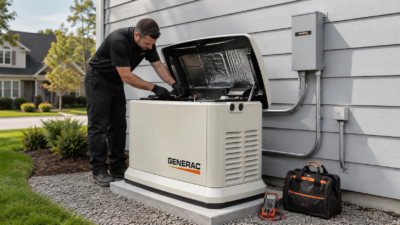
A standby generator is not a small appliance delivery. It is a permanent backup power system that connects to your home’s electrical system and either natural gas or propane. It includes the generator, automatic transfer switch, wiring, fuel connection, battery, pad or base, startup, testing, and inspection coordination.
That means the installation crew needs to work in several areas of the property. They may be outside near the generator location, beside the gas meter, near the electrical meter, inside the garage, in the basement, around the main electrical panel, or in a mechanical room.
If those areas are clear and accessible, the crew can focus on the technical work. If they are blocked, locked, cluttered, or difficult to access, the job can slow down before it even starts.
Good preparation helps with three things.
First, it helps the installation stay on schedule. The crew can begin work without spending extra time moving items, waiting for access, or trying to solve avoidable issues.
Second, it helps protect the home. When the work areas are clear, there is less chance of accidental damage to stored items, furniture, landscaping, or personal belongings.
Third, it helps avoid surprises. The homeowner understands what will happen, where the crew will work, and what parts of the home may be affected.
A generator installation should feel organized. Preparing the home is part of that.
Start with the site assessment recommendations
Before installation day, the most important thing is to review what was discussed during the site assessment or consultation.
During a proper site visit, the contractor should have looked at the generator location, electrical panel, transfer switch location, fuel source, cable route, clearances, and any possible obstacles. They may have mentioned things that need to be done before installation.
For example, they may have asked you to move patio furniture, clear the side yard, trim shrubs, unlock a gate, move a vehicle from the driveway, clear space near the panel, or confirm propane tank arrangements.
These small instructions matter.
If the quote or proposal includes notes, read them carefully before installation day. If the installer sent an email with preparation instructions, keep it handy. If anything has changed since the site visit, tell the company before the crew arrives.
Common changes include new landscaping, a fence installation, a deck extension, a finished basement renovation, new gas appliances, driveway work, or changes to the electrical panel. Even something simple like placing a shed beside the proposed generator location can affect the installation.
The site assessment is not just a sales appointment. It is the foundation for the installation plan.
Clear the area around the electrical panel
One of the most important areas to prepare is the electrical panel.
For most standby generator installations, the crew needs access to the main electrical panel or service equipment. They may need to install or connect the automatic transfer switch, run wiring, inspect existing circuits, or temporarily shut off power.
In many homes, the electrical panel is in a basement, garage, utility room, or mechanical room. Over time, these areas often become storage spaces. Boxes, tools, paint cans, cleaning supplies, holiday decorations, sports equipment, shelving, or furniture may be placed in front of the panel.
Before installation day, clear the space around the panel as much as possible.
The crew should be able to stand comfortably in front of the panel, open it fully, bring tools into the area, and work safely. If the panel is in a tight room, clear the pathway to that room as well. If the panel is behind a door, make sure the door can open fully. If there are shelves, bins, or storage items nearby, move them away.
This is not only about convenience. Electrical work requires a safe working space. A cramped or cluttered panel area makes the job harder and less safe.
If you are not sure how much space to clear, more is better. Give the crew room to work.
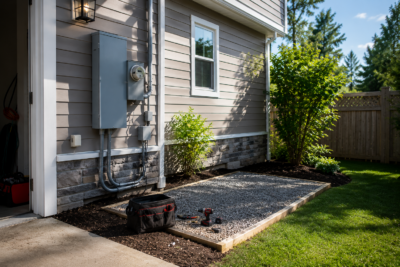
Clear the generator location outside
The generator location should also be ready.
Depending on your property, the generator may be installed beside the house, near the utility area, along a side wall, behind the home, near a garage, or in another approved location. The exact location should have been chosen based on clearances, access, fuel routing, electrical routing, and serviceability.
Before the crew arrives, remove anything that blocks that area.
This may include patio furniture, garden tools, planters, hoses, decorative stones, outdoor toys, firewood, garbage bins, storage boxes, temporary fencing, or seasonal decorations. If there are shrubs or plants close to the installation area, ask the installer whether they need to be trimmed or removed.
If the generator will sit on gravel, a pad, or a prepared base, the area should be reachable. The crew may need to bring equipment, material, and the generator itself to that location. A standby generator is heavy, so access matters.
Think about the path from the driveway or unloading area to the generator location. Is there a narrow gate? Are there steps? Is the ground soft? Is there a steep slope? Is there a fence or garden bed in the way? These details affect how the crew moves the equipment.
A clean exterior work area helps the installation look better and reduces the risk of damaging landscaping.
Make sure gates, fences, and access points are unlocked
This sounds simple, but it is one of the most common installation-day delays.
If the crew needs to work in the backyard or side yard, make sure gates are unlocked before they arrive. If there are multiple gates, unlock the one that gives the best access from the driveway to the generator location.
If there is a code for a gate, garage, or lockbox, provide it ahead of time or be available when the crew arrives. If there is a dog gate or temporary fence, move it if necessary.
For rural properties, cottages, or large lots, make sure the crew knows where to park and how to reach the work area. If the driveway is long, narrow, icy, muddy, or difficult for a service vehicle, tell the company ahead of time.
In winter, access becomes even more important. Snow should be cleared from the driveway, walkway, side yard, and generator area. If the generator location is buried under snow or ice, the crew may not be able to work safely or efficiently.
A standby generator is meant to protect you during bad weather, but the installation itself needs safe access.
Move vehicles from the driveway or work area
On installation day, the crew may need driveway space for a service truck, tools, materials, the generator, conduit, gas piping, transfer switch, ladder, or other equipment.
If your driveway is narrow or shared, move vehicles ahead of time. If the generator will be unloaded from a truck or trailer, the crew may need enough room to position equipment safely.
This is especially important in subdivisions where street parking is limited, or in rural areas where the driveway may be the only practical unloading area.
If you have multiple vehicles, trailers, boats, or recreational equipment, move them away from the work zone before the crew arrives. If the crew has to wait for vehicles to be moved, it can delay the start of the job.
The cleaner the access, the smoother the installation.
Plan for a temporary power interruption
During a standby generator installation, there may be a temporary power interruption. The length and timing depend on the type of installation and the electrical work required.
The contractor should explain this before installation day, but homeowners should be prepared. If you work from home, plan around possible downtime. Charge laptops, phones, tablets, and backup batteries ahead of time. Save computer work before the power is turned off. If you have a home office, internet equipment, or security system, ask when the power interruption is expected.
If someone in the home depends on powered medical equipment, tell the contractor before installation day. This is important. The crew needs to understand any special power needs before they start work.
If you have appliances running, such as laundry machines, dishwashers, ovens, or pumps, avoid starting them right before the electrical shutdown. A little planning prevents inconvenience.
A temporary outage during installation is normal. The point of the project is to give you automatic backup power for future outages, but the installation itself still requires safe electrical work.
Prepare for natural gas or propane access
The fuel side of the installation is just as important as the electrical side.
If the generator will run on natural gas, the crew or gas technician may need access to the gas meter, existing gas piping, and the generator location. Make sure the area around the gas meter is clear. Remove bins, hoses, plants, snow, patio items, or anything else blocking the meter.
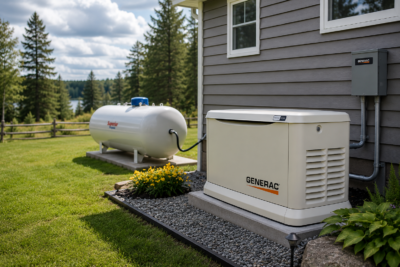
If the generator will run on propane, make sure the propane tank area is accessible. The installer may need to coordinate with the propane supplier, depending on the project. If you are installing a new tank or upgrading an existing tank, confirm the timeline before generator installation day.
For propane homes, it is also smart to check your propane level before installation and before storm season. A standby generator cannot help during a long outage if the tank is nearly empty.
If your propane supplier is involved, make sure you understand who is responsible for what. In many cases, the propane supplier handles tank placement, tank sizing, regulators, and delivery. The generator installer handles the generator, transfer switch, electrical work, and the fuel connection within their installation scope.
The main point is coordination. Everyone should know the plan before the work starts.
Tell the installer about recent electrical or gas changes
If anything has changed since the original consultation, tell the installer before installation day.
This includes new appliances, new circuits, panel work, renovations, basement finishing, a new hot tub, pool equipment, EV charger, garage heater, gas range, fireplace, water heater, furnace, air conditioner, or any other major electrical or fuel load.
These changes can affect generator sizing, gas capacity, load management, transfer switch planning, and installation scope.
For example, if you added a new gas appliance after the quote, the gas meter or piping capacity may need to be reviewed again. If you added an EV charger, the electrical load calculation may need to be reconsidered. If you finished the basement, the original wire route may no longer be accessible.
It is always better to mention changes early. A good installer can adjust the plan if they know about the issue. Surprises on installation day are harder and sometimes more expensive to solve.
Keep pets safe and away from the work area
Many homeowners have dogs or cats, and most technicians are used to working around pets. But installation day is not a normal service visit.
There may be open gates, tools, ladders, wiring, gas piping, loud equipment, vehicles moving, and people going in and out of the home. Even a friendly dog can create a safety issue if it runs into the work area or escapes through an open gate.
Before the crew arrives, plan where pets will stay. Keep dogs inside a separate room, crate, kennel, or secure area away from the work. If the crew needs access through the backyard, do not leave pets loose outside.
Cats should also be considered, especially if doors will be opened frequently. If your cat tends to run outside, keep it in a closed room until the crew is finished.
This protects the pets, the crew, and the homeowner.
Protect finished areas inside the home
In some installations, the crew may need to enter finished areas of the home. They may need to access the basement ceiling, mechanical room, garage, utility room, or panel area. Depending on the route, they may bring tools, cable, conduit, or materials through part of the house.
A good crew should be careful and respectful, but homeowners can help by protecting or clearing delicate areas.
Move fragile items away from the work path. Clear floors where tools may need to be carried. If the basement has finished flooring, area rugs, or furniture near the work area, move what you can. If there are valuables near the panel or utility room, relocate them before installation day.
If you have concerns about a finished ceiling, drywall, or hidden routing, ask the installer ahead of time. Sometimes a clean route is available. Other times, a small access opening may be needed. It is better to discuss this before the crew is standing there with tools ready.
A generator installation should be done as cleanly as possible, but some homes are more complex than others.
Understand where the transfer switch will go
The automatic transfer switch is the part of the system that safely transfers your home from utility power to generator power during an outage. It may be installed outside near the meter, inside near the panel, in the garage, or in another approved location depending on the home and system design.
Before installation day, make sure you understand where it will be installed.
If the transfer switch is going on an exterior wall, clear that area. If it is going inside, clear the room. If it is near the panel, make sure there is space.
Homeowners sometimes focus so much on the generator location that they forget about the transfer switch. But the transfer switch needs a proper mounting location, safe wiring route, and future service access.
Do not cover it with shelving, storage, furniture, or landscaping after installation. Like the generator, it is part of the backup power system and should remain accessible.
Ask what will be mounted on the wall
A standby generator installation may include more than just the generator and transfer switch. Depending on the home, there may be conduit, disconnects, gas piping, regulators, shutoff valves, or other components installed on or near the exterior wall.
Before installation day, ask the contractor to explain what will be mounted and where.
This helps avoid surprises about appearance. It also helps you prepare the area and understand the finished result.
A clean installation should look organized. Conduit should be straight and supported. Gas piping should be properly installed. Wall penetrations should be sealed. Equipment should be mounted in logical locations.
If you have a preference about appearance, discuss it early. Sometimes there are options for routing. Sometimes code, equipment requirements, and practicality limit the choices. Either way, the conversation is easier before installation begins.
Prepare landscaping expectations
Many generator installations require some work around landscaping. The generator may sit on a pad or gravel base. There may be trenching, stone removal, shrub trimming, or minor soil disturbance depending on the site.
Before installation day, understand what landscaping is included in the installation and what is not.
Some installations are very clean and require little disturbance. Others may require moving stones, cutting roots, removing plants, or creating a level base. If you have irrigation lines, landscape lighting wires, underground drains, invisible dog fences, or other buried items, tell the installer before work begins.
This is important because not all underground items are obvious. A technician can avoid what they know about, but they cannot always see private buried lines.
If you recently had landscaping done, provide as much information as possible. If you know where irrigation or lighting runs, mark it before installation.
Good communication helps protect your yard.
Think about snow, drainage, and future service access
Ontario homes deal with snow, ice, rain, leaves, and freeze-thaw cycles. That means generator placement should be practical all year, not just on installation day.
Before installation, think about how the area behaves in winter and during heavy rain.
Does snow slide off the roof into that area?
Does the wind create deep drifts there?
Does water pool after rain?
Does the ground stay soft?
Does the snowplow push snow toward that side of the house?
Will a technician be able to reach the generator in February?
Will shrubs grow into the service panels?
A generator needs airflow and service access. If snow, water, or landscaping blocks the unit, it can cause problems later.
This does not mean every generator needs a special base or elevated stand, but the location should be chosen with local conditions in mind. A good installer will consider these issues, but the homeowner knows the property best. Share what you know.
If an area floods every spring or gets buried in snow every winter, say so.
Know what parts of the home will be backed up
Before installation day, make sure you understand what your generator system is designed to power.
Some systems are whole-home backup systems. Others are essential-load systems. Some use load management to control larger appliances. Some are designed to support air conditioning, while others are not.
The homeowner should not wait until the next outage to find out what is backed up.
Ask the installer to explain:
Will this system back up the whole home?
Are any circuits excluded?
Will the air conditioner run?
Will the well pump run?
Will the sump pump run?
Will the electric stove, dryer, or hot tub run?
Is there load management?
What happens if too many large loads turn on?
What should I avoid using during an outage?
This is not about questioning the installer. It is about understanding your own system.
A standby generator can be very convenient, but it is still a power system with limits. Knowing those limits helps you use it properly.
Be available for the final walkthrough
At the end of the installation, the technician should test the system and explain the basics to the homeowner. This final walkthrough is important.
Try to be available when the crew is finishing. If you cannot be there, make sure another responsible adult is present.
During the walkthrough, the technician may explain:
How the generator starts during an outage
How the automatic transfer switch works
What the exercise cycle means
What the controller screen shows
Where the shutoff or disconnect is
What warning lights or fault messages mean
What to do if the generator does not start
How maintenance works
Who to call for service
This is your chance to ask questions while the system is right in front of you.
You do not need to become a technician, but you should understand the basic operation. A homeowner who understands the system is less likely to panic during an outage and more likely to notice when something needs service.
Save the paperwork and warranty information
After the installation, keep your paperwork in a safe place. This may include the quote, invoice, model number, serial number, warranty information, inspection documents, maintenance recommendations, and user manual.
You may need this information later for service, warranty, insurance, home resale, or maintenance scheduling.
It is also helpful to take a few photos of the installed generator, transfer switch, and fuel connection after the job is complete. If you ever need service support, photos can help the service team understand what you have before they arrive.
A standby generator is a long-term home system. Treat the documents the same way you would treat furnace, air conditioner, or electrical panel paperwork.
Plan maintenance from the beginning
A generator is emergency equipment. It needs maintenance before you need it.
Many homeowners install a generator and then forget about it until the next outage. That is a mistake. A standby generator has an engine, oil, filters, spark plugs, battery, charger, sensors, wiring, and moving parts. It sits outside through Ontario weather all year.
Regular maintenance helps keep it ready.
Before or after installation, ask about maintenance plans. Find out how often the generator should be serviced, what is included, and who to call if there is a fault.
A maintenance visit may include checking the battery, changing oil and filters, inspecting the air filter, checking spark plugs, reviewing fault history, cleaning the unit, testing operation, and making sure the exercise cycle is working.
The generator is there for the worst weather days. Those are exactly the days when you want it to be reliable.
A simple homeowner checklist before installation day
Here is a simple checklist to make the day easier:
Clear the space around the electrical panel.
Clear the generator location outside.
Unlock gates and access points.
Move vehicles from the driveway or work area.
Make sure the gas meter or propane tank area is accessible.
Remove patio furniture, planters, hoses, bins, and outdoor clutter.
Secure pets away from the work area.
Charge phones and laptops before the temporary power interruption.
Avoid running laundry, dishwasher, or major appliances before shutdown.
Tell the installer about any recent electrical, gas, or renovation changes.
Mark private underground items such as irrigation, lighting, or invisible dog fences.
Clear snow or ice from the work area in winter.
Be available for the final walkthrough.
Save all paperwork after installation.
Ask about maintenance scheduling.
This checklist is simple, but it can make a real difference.
Common homeowner mistakes before installation
The first common mistake is assuming the crew only needs outdoor access. In reality, most installations require both indoor and outdoor work.
The second mistake is leaving the electrical panel blocked. This can delay the job and create a safety issue.
The third mistake is forgetting about pets. Even friendly pets can be a problem when gates are open and tools are moving.
The fourth mistake is not planning for a temporary power interruption. If you work from home, this can become frustrating unless you prepare.
The fifth mistake is not mentioning property changes. New appliances, renovations, landscaping, or fuel changes can affect the installation.
The sixth mistake is not being available for the walkthrough. The system may work automatically, but the homeowner should still understand it.
The seventh mistake is waiting too long to think about maintenance. The best time to plan maintenance is when the generator is installed, not after it fails during an outage.
What if your home is older or has a complicated panel?
Older homes can still have standby generators, but they may need more planning.
Some older homes have crowded panels, limited service capacity, unusual wiring, finished basements, outdated equipment, or limited space for a transfer switch. This does not automatically mean a generator cannot be installed. It means the installation needs to be assessed carefully.
If your home has an older electrical panel, previous renovations, aluminum wiring, subpanels, generator equipment from a previous owner, or unclear circuit labeling, tell the contractor. The more information they have, the better they can plan.
In some cases, additional electrical work may be recommended before or during the generator installation. This could include panel cleanup, labeling, service adjustments, or other improvements. The contractor should explain what is necessary and why.
A good installation is not about forcing a generator into a bad setup. It is about making the backup power system safe, reliable, and appropriate for the home.
What if you are installing a generator at a cottage or seasonal property?
Cottage installations have their own challenges.
Access may be more difficult. Roads may be narrow, private, steep, seasonal, or not well plowed. The property may have a propane tank, well pump, septic pump, lake pump, outbuildings, or detached garage. The homeowner may not live there full-time, so scheduling and access need to be planned carefully.
Before installation day, make sure the crew can access the property, park safely, and reach the generator location. If there are keys, gate codes, private road instructions, or parking limitations, provide them ahead of time.
If the cottage is seasonal, make sure utilities are active and the propane supply is available. If the water system or electrical system has been shut down for the season, tell the installer.
For cottages, automatic backup power can be especially valuable because the generator can protect the property even when you are not there. But the installation requires clear planning.
Final thoughts: preparation helps protect your investment
A standby generator is a serious investment in your home’s comfort, safety, and resilience. It protects your furnace, sump pump, fridge, freezer, well pump, lights, internet, and other important systems when the power goes out.
But the installation experience depends on preparation.
When the panel is clear, the outdoor location is accessible, the fuel source is ready, the gates are unlocked, pets are secure, and the homeowner understands the plan, the job becomes smoother for everyone.
At Generator Experts, we believe a good installation should be organized from the first consultation to the final test. Our team helps homeowners understand the process, prepare the property, and choose a standby generator system that fits the home properly.
If you are planning a home standby generator installation in Ontario, book a free in-home or virtual consultation with Generator Experts. We will review your property, explain your options, and walk you through the next steps so your installation is safe, clean, and ready for the next outage.